
 Español
 中文
中文 русский
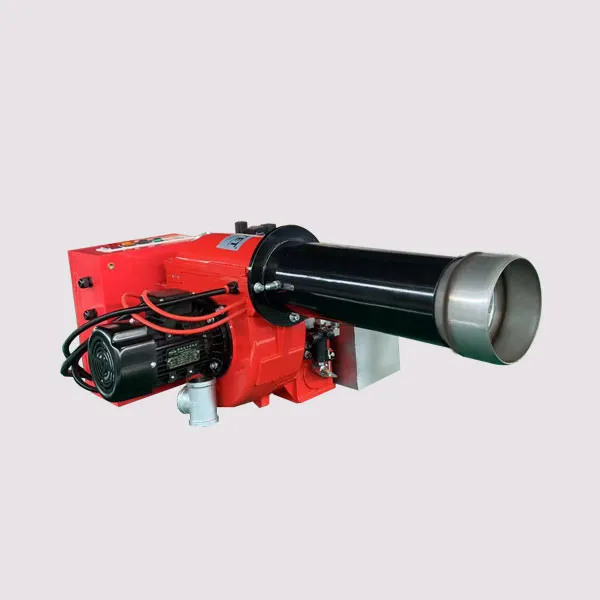
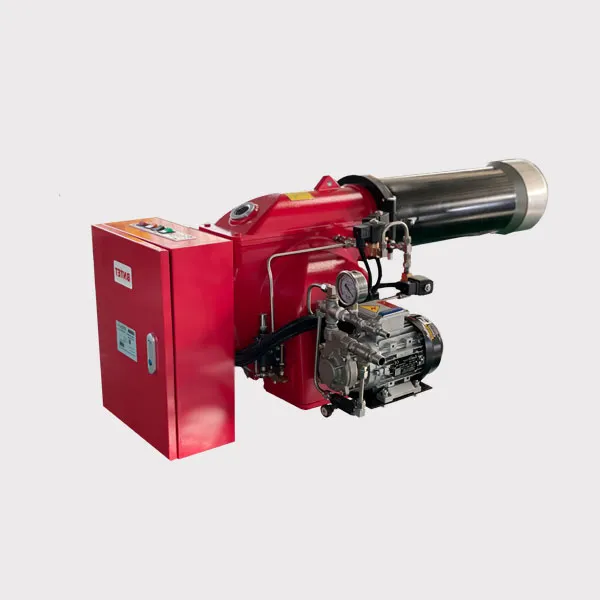
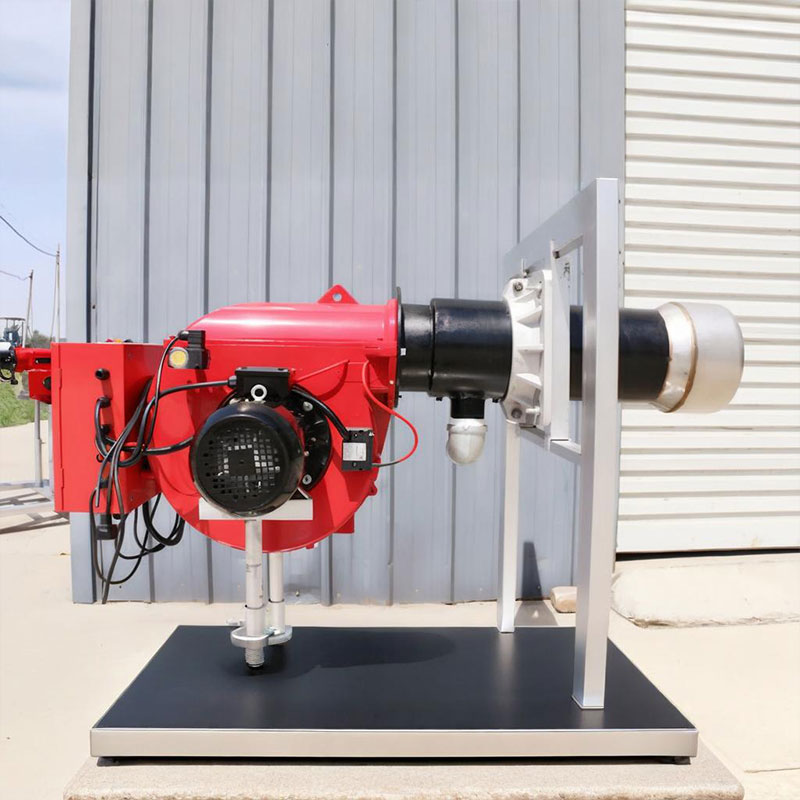
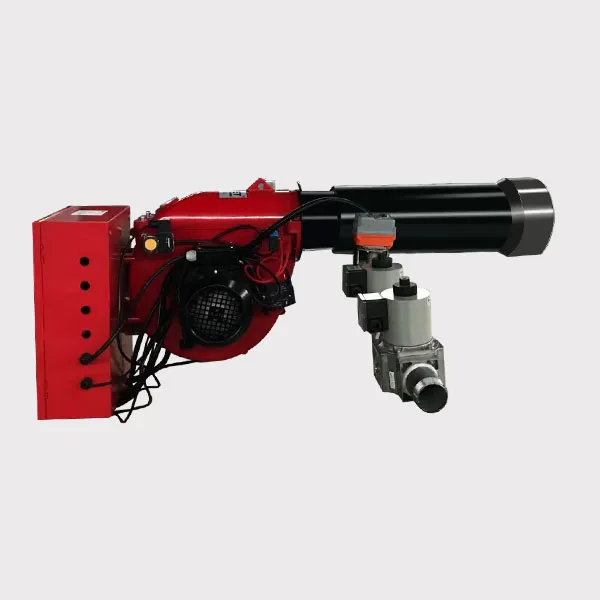
What is a one-stage gas burner and how does it work
2025-04-07 14:25:43
One-stage gas burner (also called single-stage burner) is the simplest type of gas burner, and its working state has only two modes: "on" and "off". It does not have the function of adjusting the flame size. The burner is either running at full power or completely closed. This burner is usually used for small boilers or occasions where load changes are not required.
Features of one-stage gas burners
●Simple structure
Since there are only two states, on and off, the structure of the one-stage burner is relatively simple and easy to maintain.
●Low cost
The manufacturing cost is low and suitable for projects with limited budgets.
●Applicable scenarios
It is suitable for occasions with small load changes and low requirements for combustion control, such as small heating systems or hot water boilers.
●Operation mode
After the burner is started, it runs at maximum power and is completely closed after reaching the set temperature.
Working principle of one-stage gas burner
●Start-up phase
When the boiler needs to be heated, the control system sends a start signal and the burner starts to run.
The gas valve opens and the gas enters the burner.
The fan starts to send air into the burner.
Gas and air are mixed in the mixing device.
●Ignition stage
The ignition system (such as electric spark or hot surface ignition) ignites the mixed gas to form a flame.
The flame monitoring system detects whether the flame is ignited normally. If the ignition fails, the system will automatically close the gas valve to ensure safety.
●Combustion stage
The burner operates at maximum power, the flame burns in the combustion chamber, and releases heat to heat the water or steam in the boiler.
●Closing stage
When the water temperature or steam pressure in the boiler reaches the set value, the control system sends a shutdown signal.
The gas valve is closed and the gas supply is stopped.
The fan stops running and the burner is completely closed.
Advantages and disadvantages of a first-stage fire gas burner
Advantages
●Simple structure and easy maintenance
Since there is no complex adjustment device, the failure rate is low and the maintenance cost is low.
●Low cost
The manufacturing cost and installation cost are low, suitable for small projects.
●Reliable operation
Under stable load conditions, the operation is stable and reliable.
Disadvantages
●Low energy efficiency
Since there are only two states, full open and full closed, the flame size cannot be adjusted according to the load demand, which may lead to energy waste.
●Large temperature fluctuations
Frequent start and stop of the burner may cause large fluctuations in boiler water temperature or steam pressure.
●Limited scope of application
Only suitable for occasions with small load changes, not suitable for systems with high temperature control requirements.
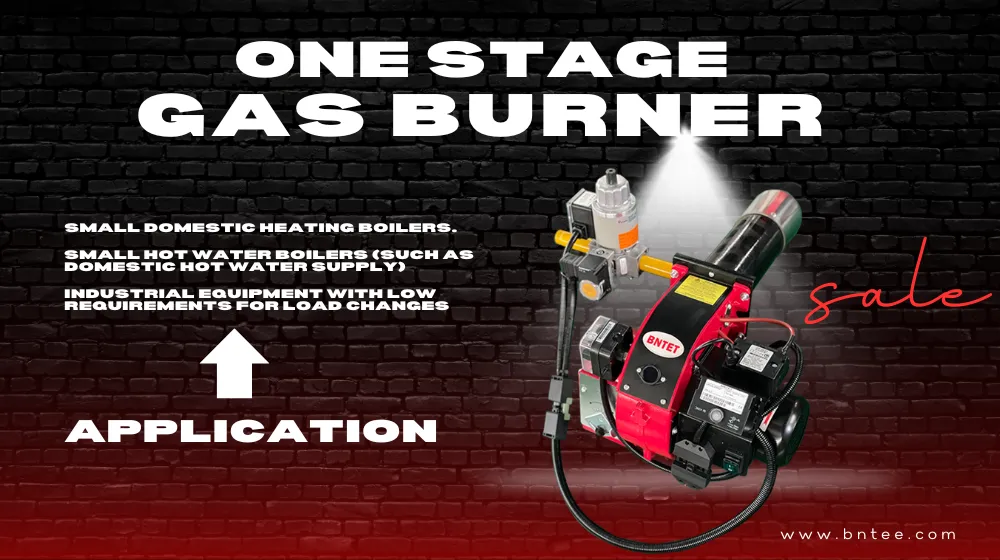
Applicable scenarios
One-stage gas burners are usually used in the following occasions:
●Small household heating boilers.
●Small hot water boilers (such as household hot water supply).
●Industrial equipment with low requirements for load changes.
Comparison with multi-stage and proportional control burners
●One-stage burner
Only two states, open and closed, cannot adjust the flame size.
●Two-stage burner
There are two states, high fire and low fire, which can be switched according to load demand.
●Proportional control burner
The flow of gas and air can be continuously adjusted according to load demand to achieve more precise temperature control.
Although the one-stage gas burner has simple functions, it is still an economical and practical choice in some small occasions or where the control requirements are not high. If higher energy efficiency and more precise control are required, two-stage or proportional modulation burners can be considered.