
 Español
 中文
中文 русский
The difference between steam boiler, hot water boiler and hot oil boiler
2025-03-21 10:55:36
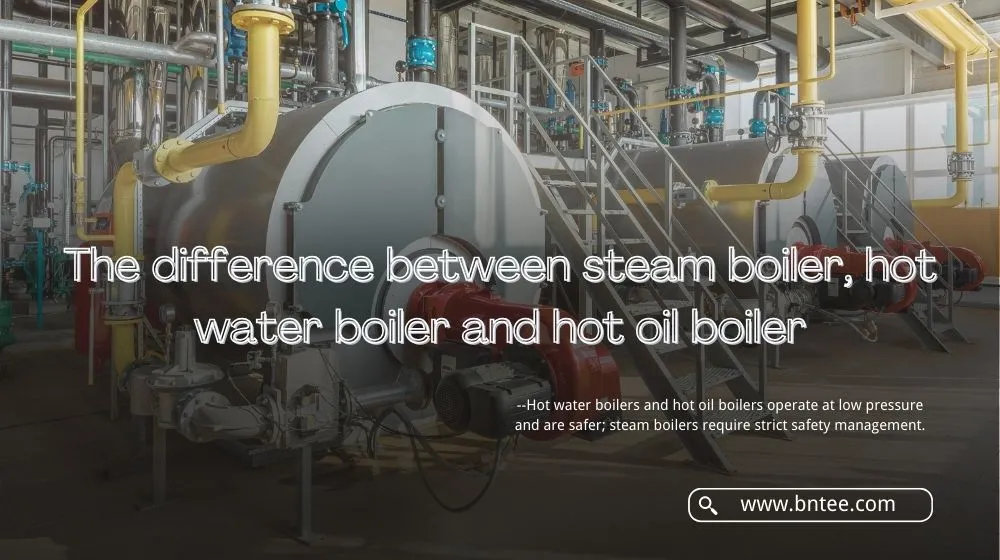
Steam boilers, hot water boilers and hot oil boilers are three common types of boilers, which have significant differences in working principles, application scenarios and characteristics. The following is a detailed comparison of them:
1. Steam boiler
●Working principle:
Heat water to boiling to produce steam.
The steam is transported to the heat-using equipment through pipelines, condenses into water after releasing heat, and returns to the boiler for recycling.
●Output medium: steam (saturated steam or superheated steam).
●Features:
High pressure, usually requires pressure vessel certification.
Applicable to occasions requiring high-temperature steam.
●Application scenarios:
Industrial production (such as food processing, textiles, chemicals).
●Power plants.
Hospital disinfection.
●Advantages:
Steam has large heat capacity and high heat transfer efficiency.
Applicable to high temperature and high pressure requirements.
●Disadvantages:
The system is complex and requires water treatment equipment.
High maintenance cost.
2. Hot water boiler
●Working principle:
Heat water to a certain temperature (usually below boiling point) and deliver hot water to heat-using equipment through a circulation pump.
After hot water releases heat, it returns to the boiler for reheating.
●Output medium: hot water.
●Features:
Low pressure and high safety.
Suitable for low-temperature heating needs.
●Application scenarios:
Building heating (such as residential and office buildings).
Domestic hot water supply.
Low-temperature industrial heating.
●Advantages:
Simple system and stable operation.
Low maintenance cost.
●Disadvantages:
Low heat capacity, not suitable for high-temperature needs.
3. Hot oil boiler (thermal oil boiler)
●Working principle:
Use thermal oil (such as mineral oil or synthetic oil) as the heat transfer medium.
The thermal oil is heated in the boiler, delivered to the heat-using equipment through a circulation pump, and returns to the boiler for reheating after releasing heat.
●Output medium: thermal oil.
●Features:
High temperature heating can be achieved under normal pressure (high boiling point of thermal oil).
Suitable for occasions requiring precise temperature control.
●Application scenarios:
Chemical, petroleum, plastic processing.
Textile, printing and dyeing.
Food processing (such as frying, drying).
●Advantages:
High temperature and low pressure, high safety.
Accurate temperature control.
●Disadvantages:
High cost of thermal oil.
Complex system, need to replace thermal oil regularly.
Steam boiler|Hot water boiler|Hot oil boiler
| Features | Steam boiler💎 | Hot water boiler💎 | Hot oil boiler💎 |
| Output medium | Steam | Hot water | Thermal oil |
| Working Pressure | High | Low | Normal or Low Pressure |
| Temperature Range | 100°C and above (saturated steam) | 0°C - 90°C (heating) | 200°C - 400°C |
| Application Scenarios | Industry, power generation, sterilization | Building heating, domestic hot water | Chemical, textile, food processing |
| Advantages | Large thermal capacity and high heat transfer efficiency | Simple system, low maintenance cost | High temperature and low pressure, precise temperature control |
| Disadvantages | Complex system, high maintenance cost | Low thermal capacity | High cost of heat transfer oil, complex system |
☆☆☆☆☆---------------------------------------------------------------------------
How to choose the right boiler type?
●According to heat demand:
If high-temperature steam is required, choose a steam boiler.
If it is used for building heating or domestic hot water, choose a hot water boiler.
If high temperature and precise temperature control are required, choose a hot oil boiler.
●According to operating costs:
The initial investment and maintenance costs of steam boilers and hot oil boilers are higher, while hot water boilers are lower.
●According to safety:
Hot water boilers and hot oil boilers operate at low pressure and are safer; steam boilers require strict safety management.
By understanding the differences between these three boilers, you can choose the most suitable boiler type according to your actual needs.