
 Español
 中文
中文 русский
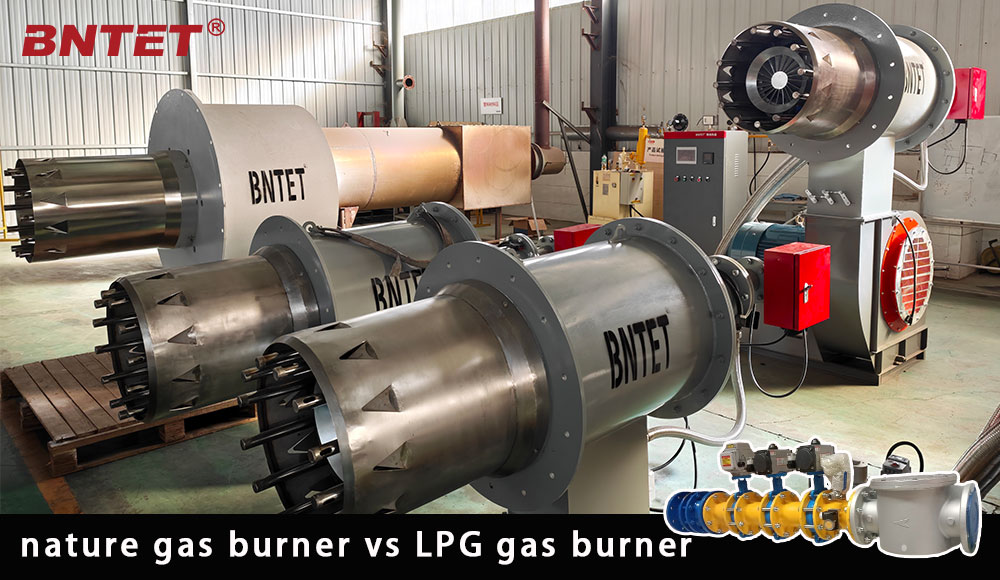
nature gas burner vs LPG gas burner
2025-12-10 15:39:37
Here is a clear and concise comparison summary. Below is a detailed breakdown of the core differences between a Natural Gas Burner (NG Burner) and a Liquefied Petroleum Gas Burner (LPG Burner), simplified as "NG Burner vs. LPG Burner" for easier understanding.
Core Comparison Table
| Feature | Natural Gas (NG) Burner | Liquefied Petroleum Gas (LPG) Burner |
|---|---|---|
| Main Component | Primarily Methane (CH₄) | Propane (C₃H₈), Butane (C₄H₁₀), or a mixture |
| Fuel State | Supplied via pipeline at low pressure, always in gaseous state | Stored in pressurized tanks as liquid, vaporizes before use |
| Calorific Value | Lower (approx. 9.7 - 10.6 kWh/m³) | Very High (Propane: ~25.8 kWh/m³, ~2.5-3x NG) |
| Operating Pressure | Lower (Typical: 15-30 mbar / 0.2-0.4 psi) | Higher (Typical: 30-50 mbar / 0.4-0.7 psi or more) |
| Air Requirement | More total air required for the same heat output | Less total air required for the same heat output |
| Gas Density | Lighter than air (~0.71 kg/m³), leaks rise and disperse | Heavier than air (Propane: ~1.88 kg/m³), leaks sink and accumulate, higher risk |
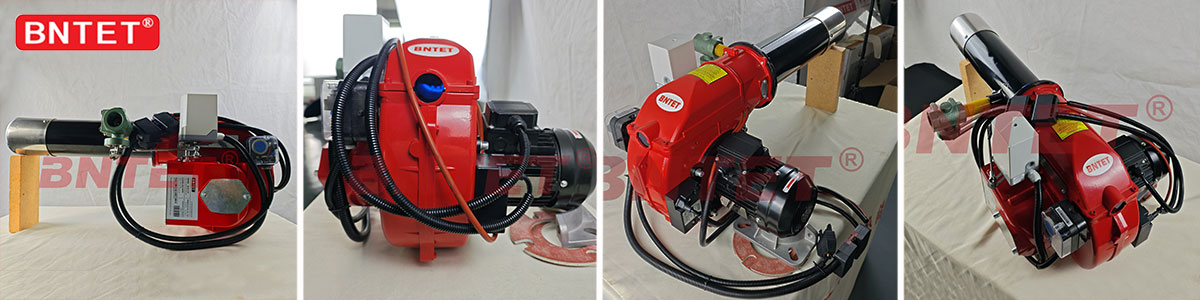
| Key Component Differences | 1. Nozzle: Larger orifice to handle low-energy, high-volume flow. 2. Valve Train/Regulator: Designed for lower inlet pressure. 3. Burner Head/Damper: Air passages and settings optimized for methane. | 1. Nozzle: Much smaller orifice to restrict the high-energy flow. 2. Valve Train/Regulator: Must withstand higher inlet pressure and regulate precisely. 3. Burner Head/Damper: Designed to match propane/butane flame speed and air demand. |
| Supply Method | Fixed connection to municipal pipeline network, continuous supply. | Dependent on tanks/cylinders, requires periodic replacement or refilling. |
| Common Applications | Fixed locations with pipeline access: homes, factories, commercial heating, industrial processes. | Areas without pipelines, mobile equipment, temporary sites, some residential/commercial backup systems. |
Detailed Engineering Principles (Why They Are NOT Interchangeable)
1.Power Catastrophe: This is the most immediate danger. If LPG is connected to an unmodified NG burner, the fuel energy input can instantly surge to over 2.5 times the design value due to LPG's high calorific value and the burner's oversized nozzle. This will overload the equipment, potentially melting the heat exchanger, causing a fire, or explosion.
2.Pressure Mismatch: LPG system pressure exceeds the design limits of NG valve trains, which can lead to:
Regulator failure, preventing stable pressure output.
High-pressure gas "blowing out" the pilot or main flame.
Damaged valve seals, causing leaks.
3.Combustion Deterioration: Severe air-to-fuel ratio imbalance.
NG Burner using LPG: Insufficient air for the high-energy fuel leads to incomplete combustion, producing large amounts of toxic carbon monoxide (CO) and soot.
LPG Burner using NG: Low-energy fuel with excess air leads to unstable flame, lift-off, extinction, and frequent safety lockouts.
4.Safety Risks: LPG is heavier than air. Leaks do not disperse easily, forming flammable/explosive clouds near the ground. This risk profile demands potentially different safety designs and installation codes (e.g., ventilation requirements).
Conclusion and Critical Warning
They Are Dedicated Equipment: NG burners and LPG burners are specifically designed, tuned, and certified for the unique properties of their respective fuels.
Conversion Requires Professional Retrofit: Converting a burner from one fuel to another (e.g., switching a pipeline NG appliance to use an LPG tank) is NOT simply changing the gas supply. It MUST be performed by qualified technicians using the manufacturer's specified complete conversion kit (including correct nozzles, valve train parts, etc.) and followed by mandatory combustion adjustment using a flue gas analyzer.
NEVER Modify It Yourself: Attempting to interchange fuels or components yourself is extremely dangerous and can lead to fatal accidents and property damage.
In simple terms: Think of an NG burner as a "gasoline engine" and an LPG burner as a "diesel engine." Using the wrong fuel will either prevent the machine from working, cause severe damage, or lead to a catastrophic failure.